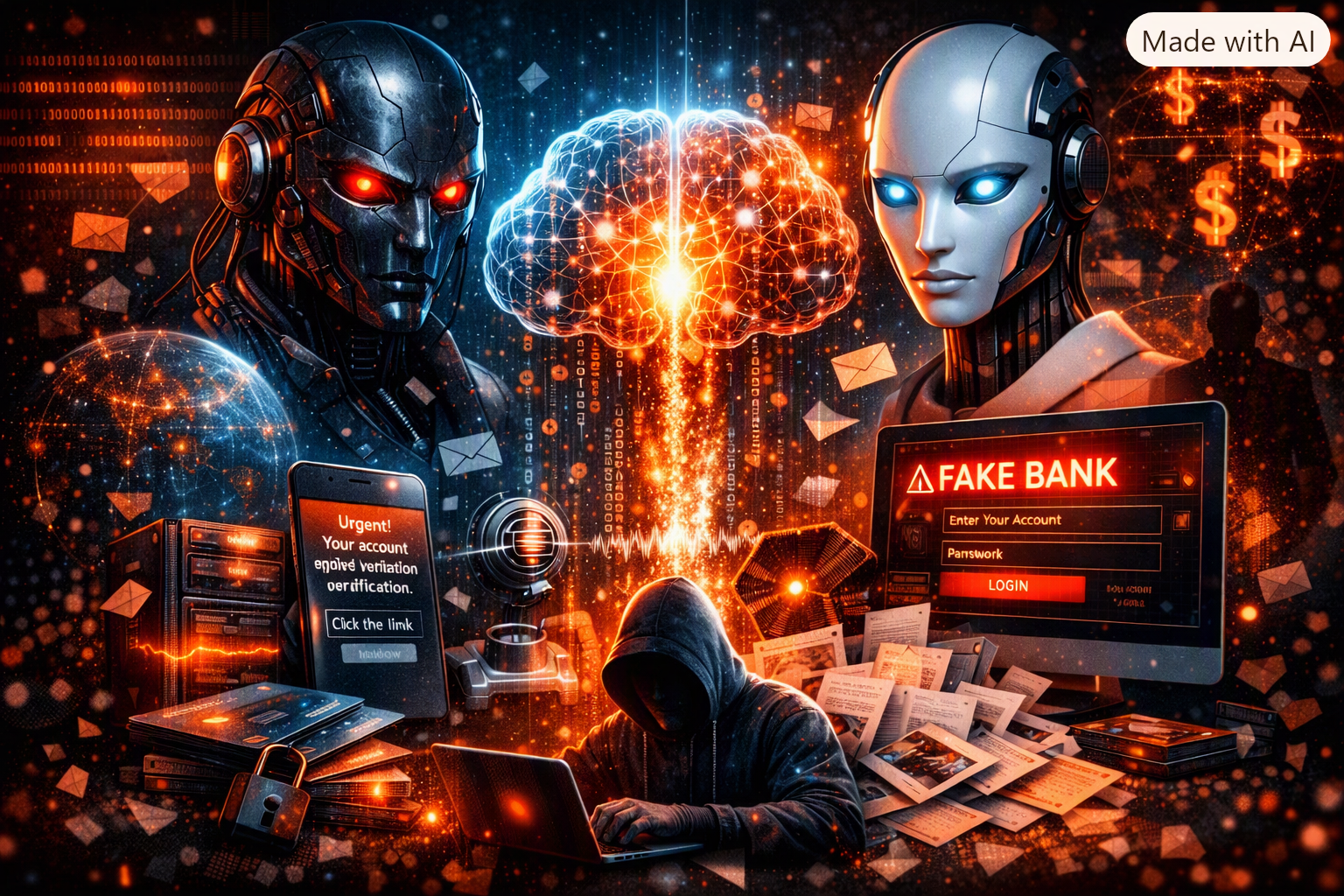
Japan-based analysis written by an affected user experiencing real data breaches in 2026.
Introduction
In 2026, AI tools like ChatGPT, Gemini, and Claude have become powerful productivity platforms — but attackers now use them to automate fraud, phishing, and identity theft after major data breaches.
This article explains how AI is transforming cybercrime, and how recent incidents in Japan fit into this global trend.
🔥 AI Has Become a Fraud Accelerator
Attackers no longer write phishing emails manually. They use AI models to generate:
- Perfect English
- Natural Japanese
- Personalized messages
- Emotionally persuasive content
- Fraud scripts tailored to leaked data
AI has turned cybercrime into high-speed, low-effort automation.
🔍 How Attackers Use AI After a Data Breach
✔ 1. Personalized Phishing Using Leaked Data
AI can instantly generate messages like:
“Your reservation on October 12 requires confirmation. Please verify your phone number and bank account.”
Because attackers already have leaked data, AI can craft messages that look 100% legitimate.
✔ 2. Voice Phishing (AI Voice Cloning)
Attackers clone voices using leaked phone numbers and public audio.
They can impersonate:
- Customer support
- Bank staff
- Delivery companies
- Travel agencies
This makes phone-based fraud extremely convincing.
✔ 3. Automated Social Engineering
AI can simulate:
- Customer service scripts
- Refund procedures
- Identity verification flows
Attackers run these scripts in chat apps to trick victims.
✔ 4. AI-Assisted Credential Stuffing
AI helps attackers:
- Test leaked passwords
- Identify weak accounts
- Generate login variations
- Automate brute-force attempts
This is especially dangerous when password hashes are leaked.
✔ 5. Fraudulent Refund Requests
With leaked bank info, AI can:
- Generate refund emails
- Create fake documents
- Write convincing explanations
- Mimic polite Japanese customer tone
This directly connects to refund-related data leaks.
🔥 Why AI Fraud Is More Dangerous Than Traditional Attacks
✔ 1. Perfect Language Quality
No typos, no awkward phrasing — impossible to detect by tone.
✔ 2. Personalized to Each Victim
AI creates “fraud tailored specifically to you.”
✔ 3. 24/7 Automation
AI never sleeps. It can generate thousands of phishing messages per minute.
✔ 4. Accessible to Anyone Worldwide
Cybercrime no longer requires technical skill.
🔍 Real Examples Seen in Japan (2026)
- “Please confirm your reservation details.”
- “Your refund process is incomplete.”
- “Identity verification is required.”
- “Your bank account needs re-registration.”
These match patterns of AI-generated fraud.
🔥 What Users Should Do
✔ 1. Never trust refund messages
Especially those asking for bank details.
✔ 2. Check official websites directly
Avoid clicking links in emails.
✔ 3. Enable 2FA everywhere
AI-driven attacks bypass weak passwords easily.
✔ 4. Be cautious of phone calls
Even realistic voices may be AI-generated.
Conclusion
AI tools like ChatGPT and Gemini have transformed cybercrime. Attackers now use AI to automate fraud, personalize phishing, and exploit leaked data at massive scale.
As someone directly affected by recent breaches in Japan, I strongly recommend heightened caution toward refund messages, identity verification requests, and phone calls.
AI-powered fraud is not the future — it is already happening.


コメント