Introduction
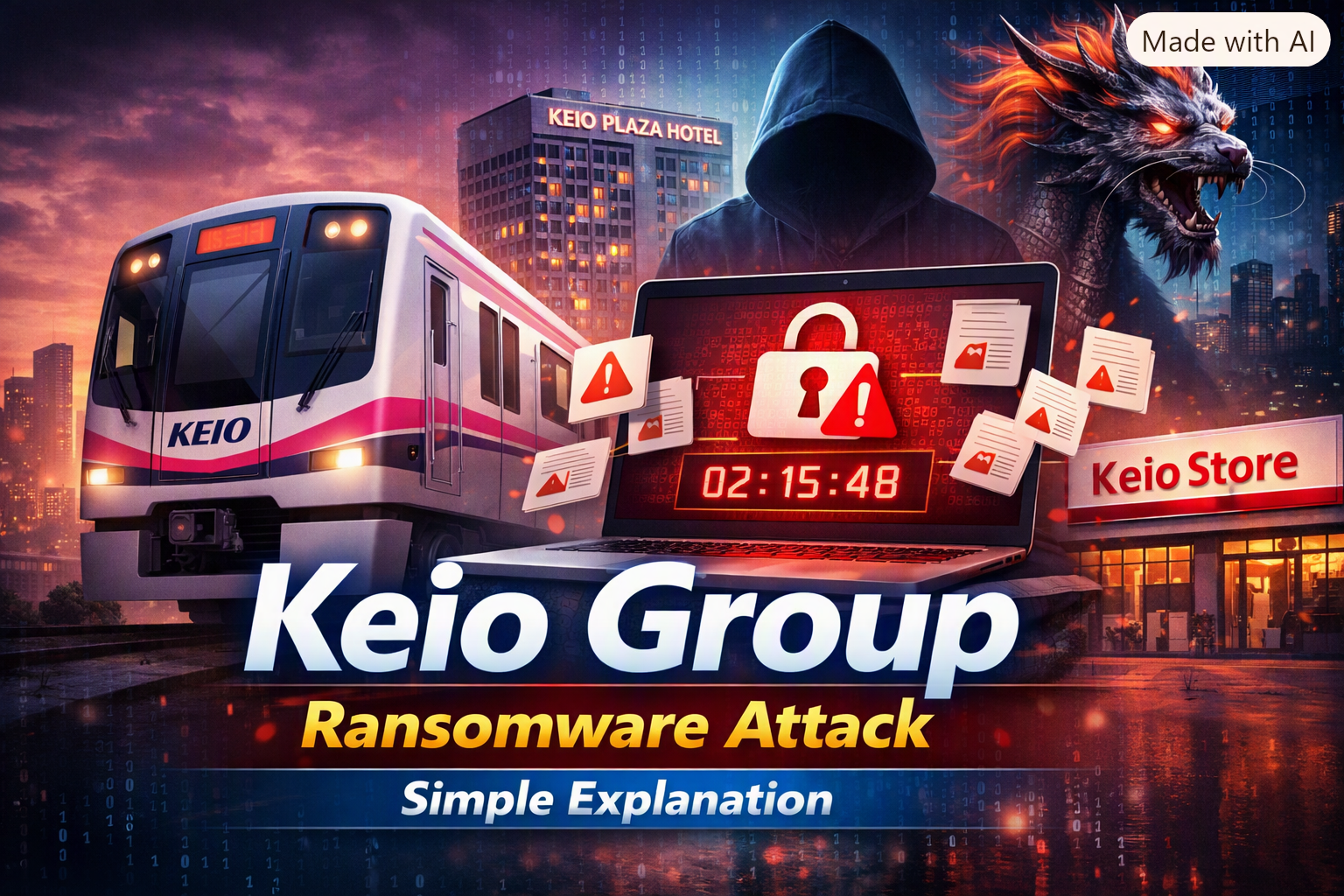
In October 2026, the Keio Group — a major Japanese company that operates trains, hotels, and retail stores — became the target of a ransomware attack by an international hacker group called Qilin. The incident did not stop train operations, but it caused problems in hotel reservations, store payments, and internal communication systems.
This article explains the attack in simple terms: who Qilin is, what happened to Keio, and why this matters for everyday life in Japan.
1. Who Is Keio Group?
Keio Group is an important part of daily life in Tokyo. It operates:
- Keio Railway, used by millions of commuters
- Keio Plaza Hotel, a major hotel chain
- Keio Store, a retail supermarket chain
- Various digital systems for reservations, payments, and customer services
Because Keio runs both transportation and consumer services, any digital trouble can affect many people.
2. Who Is Qilin?
Qilin is a ransomware group known for:
- Stealing data from companies
- Threatening to publish the data
- Using countdown timers to pressure victims
- Targeting companies around the world, including Japan
They often publish “proof” of stolen data on their website to force companies to negotiate.
3. What Happened to Keio Group? (Simple Timeline)
September 26 — System Trouble Begins
Keio reported unauthorized access that caused:
- Hotel reservation system failures
- Payment problems at Keio Store
- Email system outages
- Internal network disruptions
Trains continued running normally.
October 16 — Qilin Claims Responsibility
Qilin posted:
- 27 images of what they say are Keio’s internal documents
- A countdown timer threatening full data release
- A message claiming they stole Keio’s data
Keio responded that they are still checking whether the documents are real.
4. Did Train Operations Stop?
No. Keio’s trains continued running without interruption.
However, the attack affected digital services around the railway, such as:
- Hotel bookings
- Retail payments
- Internal communication
- Customer service systems
This shows that even if trains keep moving, the digital systems supporting daily life can still be disrupted.
5. What Was in the Leaked Documents?
Qilin posted images of:
- Business contracts
- Internal emails
- HR-related documents
- Workflow charts
- Files containing names and email addresses
Keio has not confirmed whether these documents are genuine.
6. Why This Attack Matters
This incident highlights several important issues:
1. Digital systems are deeply connected
Even if trains run, hotel and retail systems can fail.
2. Ransomware groups now target public services
Qilin has attacked:
- Beverage companies
- Municipal contractors
- Retail chains
- Infrastructure-related companies like Keio
3. Japan’s infrastructure is vulnerable
Many companies rely on shared IT systems and external vendors, making them easier targets.
7. What Keio Is Doing Now
Keio Group is:
- Working with cybersecurity experts
- Investigating the leaked documents
- Checking whether personal data was exposed
- Restoring affected systems
- Cooperating with law enforcement
The investigation will determine how attackers entered the system and what data was taken.
Conclusion
The Qilin ransomware attack on Keio Group shows how cyberattacks can affect everyday life — even when essential services like trains continue running. It highlights the growing risk to Japan’s digital infrastructure and the need for stronger cybersecurity measures across transportation, hospitality, and retail sectors.
For the public, this incident is a reminder that cybersecurity is no longer just a corporate issue — it is part of protecting daily life.

コメント