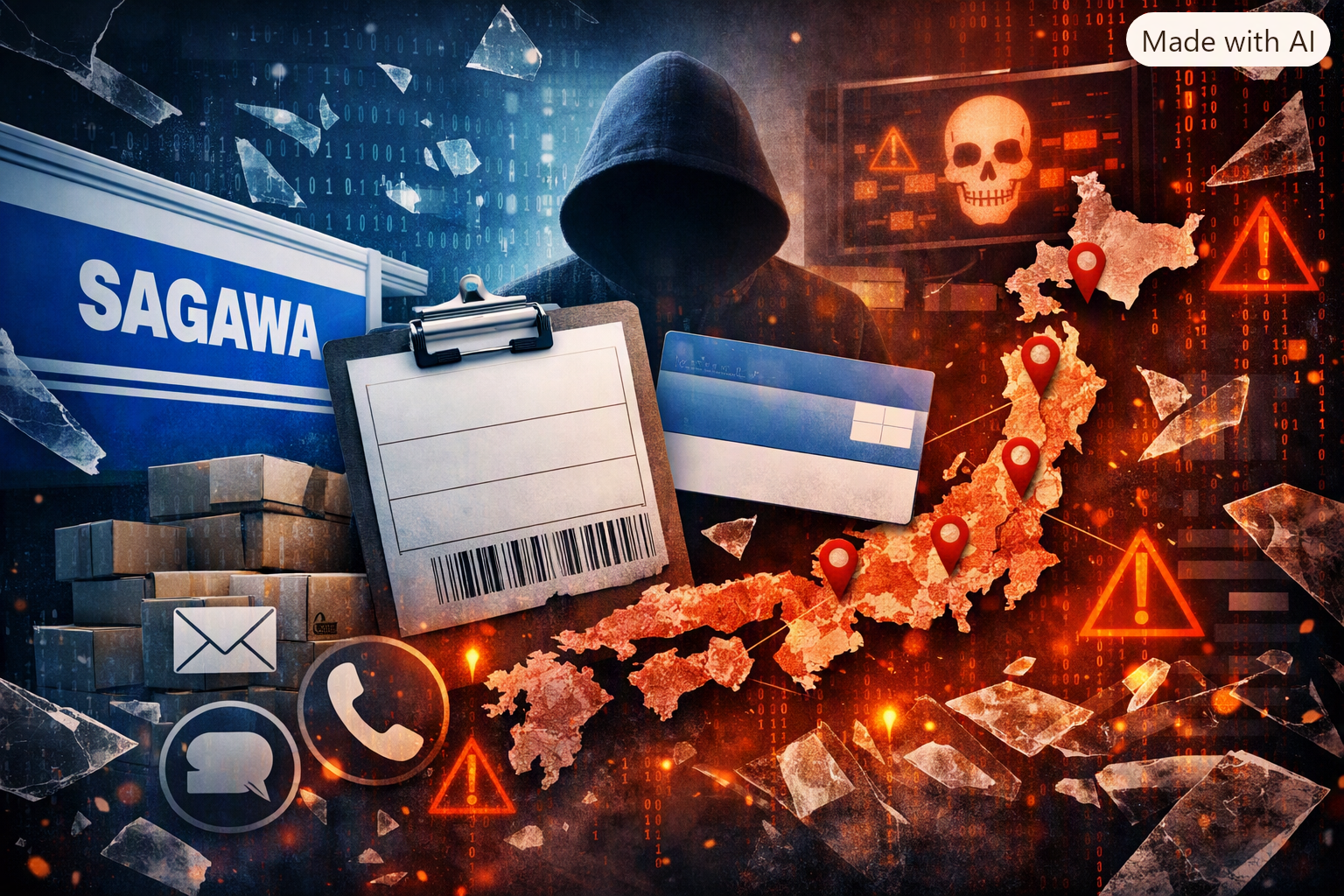
📰 Japan’s Largest Logistics Data Breach
On October 23, 2026, Sagawa Express — one of Japan’s largest logistics companies — announced that its parcel tracking system had been compromised by unauthorized access. The incident potentially exposed up to 53.23 million records, making it Japan’s largest-ever data breach in the logistics sector.
The affected data included:
- Sender and recipient names
- Addresses
- Phone numbers
- Membership information from “Smart Club” (including email addresses and IDs)
No credit card information was leaked, as Sagawa does not store full card numbers or security codes.
⚙️ Timeline of the Incident
- September 30, 2026: Suspicious access detected in the parcel tracking system
- October 1–22: System isolated, forensic investigation initiated
- October 23: Partial service restoration and public disclosure
During the investigation, Sagawa collaborated with external cybersecurity experts to determine the scope of the breach and secure its systems.
🔍 Root Cause: Unauthorized Access via System Vulnerability
The breach was caused by unauthorized access exploiting a system vulnerability in the parcel tracking infrastructure. Attackers gained access to internal databases containing shipment and membership data.
Key contributing factors:
- Legacy system exposure — older modules lacked modern authentication protocols.
- Insufficient segmentation — internal data was accessible through a single compromised endpoint.
- Delayed detection — abnormal access patterns were identified only after large-scale data extraction.
This combination allowed attackers to extract massive amounts of personal data before detection.
🧠 Why It Became a National Concern
The scale and nature of the leaked data made the incident particularly serious:
- It involved core logistics infrastructure used nationwide.
- The leaked data (names, addresses, phone numbers) can be easily misused for phishing and identity fraud.
- The number of records exceeded previous major breaches such as Benesse (30 million records).
As a result, the case drew intense media coverage and prompted discussions about Japan’s cybersecurity readiness.
🛡️ Immediate Response and Ongoing Measures
Sagawa Express took the following actions:
- Suspended affected services and isolated compromised systems
- Conducted forensic analysis with external experts
- Reported the incident to Japan’s Personal Information Protection Commission
- Announced plans for system upgrades and stricter access controls
The company stated that no secondary misuse of leaked data has been confirmed as of now, but investigations continue.
🔧 Lessons and Implications
This breach highlights structural challenges in Japan’s logistics IT systems:
- Many rely on legacy frameworks not designed for modern cyber threats.
- Data protection standards vary across subcontractors and service providers.
- Continuous monitoring and zero-trust architecture are becoming essential for nationwide logistics networks.
📈 Conclusion
The Sagawa Express data breach serves as a wake-up call for Japan’s logistics and IT industries. It underscores the need for:
- Proactive vulnerability management
- Unified security standards across partners
- Transparent communication with affected users
As investigations continue, Sagawa’s response will likely shape future cybersecurity policies across Japan’s logistics sector.

コメント