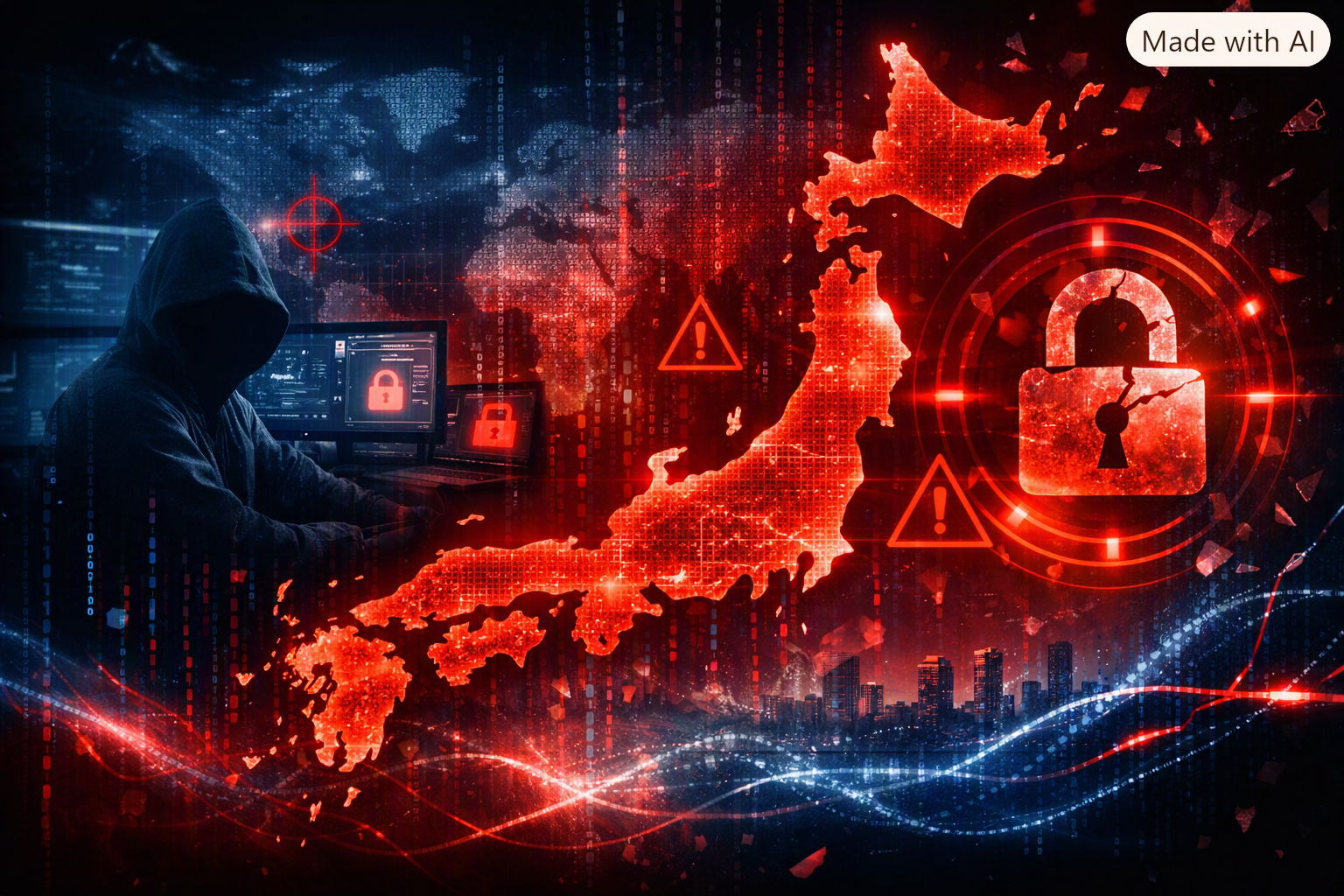
📰 Japan Faces Coordinated Cyberattacks from China State‑Linked Groups
In recent months, Japan has been the target of large‑scale cyberattacks conducted by China state‑linked hacking groups, according to reports from Microsoft, GMO Cybersecurity, and Japan’s National Police Agency. These attacks have affected Japanese companies across logistics, retail, finance, manufacturing, and critical infrastructure.
⚠️ What Happened
1. Microsoft Identifies “Storm‑0940” as a China State‑Linked Hacker Group
Microsoft reported that a China‑affiliated group known as Storm‑0940 used AI‑powered tools to attack hundreds of organizations worldwide, including dozens in Japan.
Their AI agent “ARTEX” was capable of:
- Up to 2,900 login attempts per minute
- Automated privilege escalation
- Rapid exploitation of weak authentication systems
Microsoft confirmed that Japanese companies were among the targets.
2. GMO Cybersecurity Confirms Attacks on Japanese Companies
GMO Cybersecurity reported that the same AI‑driven attack tools were used against multiple Japanese companies, including:
- Retail chains
- Logistics providers
- Financial institutions
- Technology firms
Between September and October alone, eight Japanese companies publicly disclosed data breaches linked to suspicious foreign access.
3. Japanese Government Acknowledges China‑Linked Cyber Threats
Japan’s National Police Agency and Cabinet Secretariat jointly signed an international advisory warning about:
- China‑linked APT groups
- Attacks exploiting vulnerabilities
- Use of legitimate tools to hide malicious activity
- Targeting systems without multi‑factor authentication
This marks one of Japan’s strongest official acknowledgments of China‑related cyber threats.
🔍 Root Causes of the Attacks
1. Legacy Systems Still Used in Japan
Many Japanese companies rely on older systems that lack:
- Modern authentication
- Proper segmentation
- Real‑time monitoring
These weaknesses make intrusion easier.
2. Supply Chain Vulnerabilities
Japan’s logistics and manufacturing sectors depend heavily on subcontractors. Security standards vary widely, creating exploitable gaps.
3. Lack of Zero‑Trust Architecture
Many systems still assume internal access is “trusted,” which allows attackers to move laterally once inside.
🧠 Why Japan Is Being Targeted
Experts point to several reasons:
- Japan’s dense critical infrastructure (railways, ports, telecom)
- Concentration of semiconductor and manufacturing hubs
- High‑value corporate data
- Geopolitical tensions in East Asia
- Slow adoption of modern cybersecurity frameworks
This makes Japan a high‑value, high‑impact target for state‑linked cyber groups.
🛡️ Japan’s Response
Japan has begun strengthening its defenses by:
- Increasing mandatory reporting of cyber incidents
- Expanding cooperation with US and EU cybersecurity agencies
- Encouraging companies to adopt zero‑trust models
- Requiring stronger authentication for critical systems
However, experts warn that attacks will continue to escalate unless legacy systems and supply‑chain vulnerabilities are addressed.
📈 Conclusion
Japan is currently facing coordinated cyberattacks from China state‑linked hacking groups, targeting both private companies and critical infrastructure. The combination of legacy systems, fragmented security standards, and geopolitical tensions has made Japan a prime target.
コメント